Printable · Any age that can hold a protractor · One outing
Nature detective field report
One sheet carried outdoors. Hunt five angles and name each one, observe a living thing with what you saw kept strictly apart from what you think it means, then argue for something you found and concede the other side.
Scan to open in WeChat
WeChat has no share link, so point a phone at the code.
Three tasks on one sheet, meant to be done in the order they appear, outdoors, in one go.
The first is an angle hunt: find five, measure each with a protractor, mark it acute, right or obtuse. Then the question that does the actual work — which one surprised you, and why. A number can be looked up. A number that contradicts what you expected has to be accounted for.
The second is an observation, and the sheet enforces the discipline typographically: there is a line across the page, what you saw goes above it, what you think it means goes below. Time, place, what the thing looked like, then the inference, then one question you cannot answer yet.
The third is a formal argument — claim, reasons, concede the counterargument, conclude. Written outside, in pencil, about something found that day.
At the bottom is the question worth keeping: what was the moment this week you saw most precisely, in any subject at all.
What it is not
There is no answer key, because there are no answers — every response is about a particular gate on a particular morning. There is no reading level, because the reading is four instructions. A child who cannot yet write can dictate it.
What it costs
A protractor and a tape measure. The rest is somewhere to walk.
Read the mornings this came from
The thread runs alongside the plan, one essay a week.
The world is a puzzle →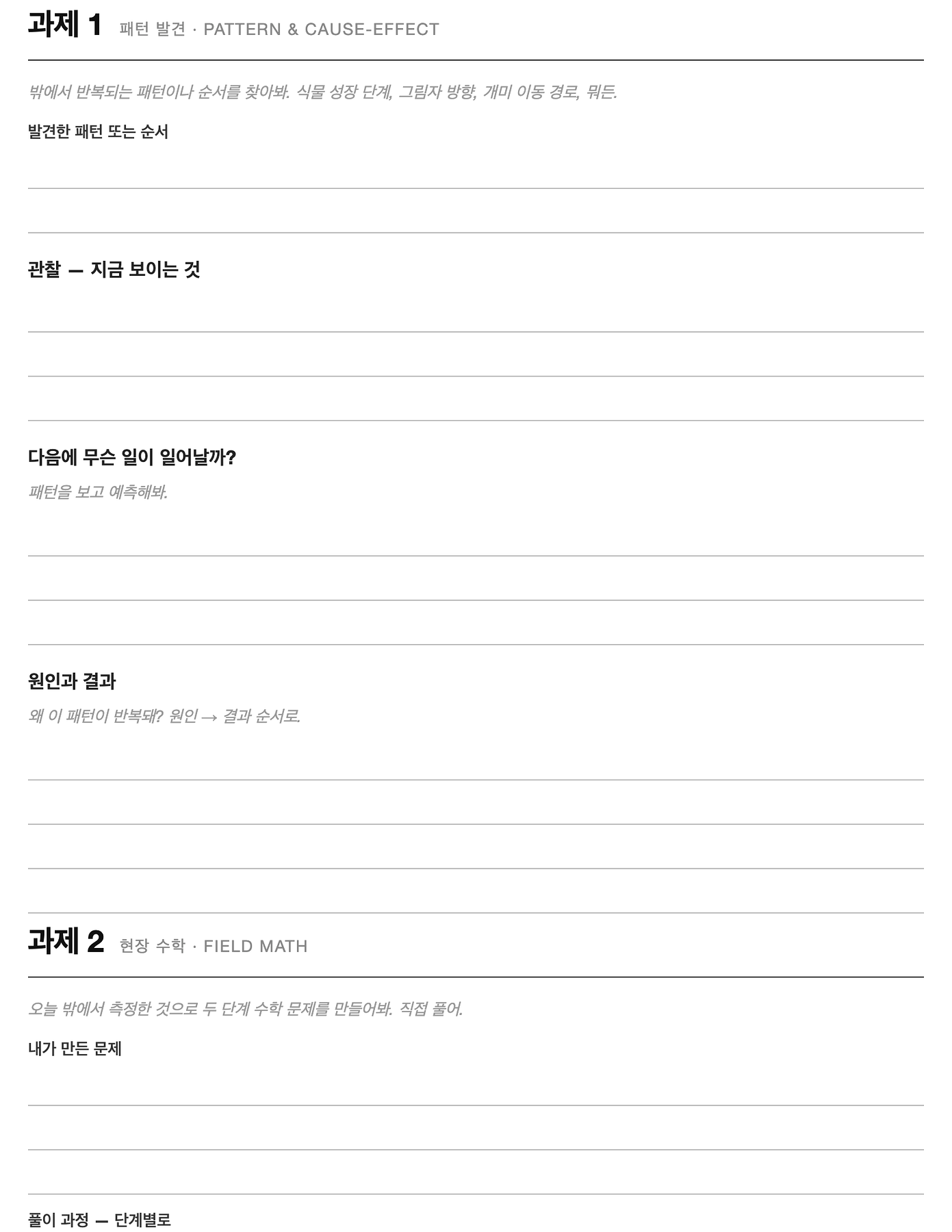 Grades 2 to 5 · One outing plus a sitting · about three hoursFinal field report
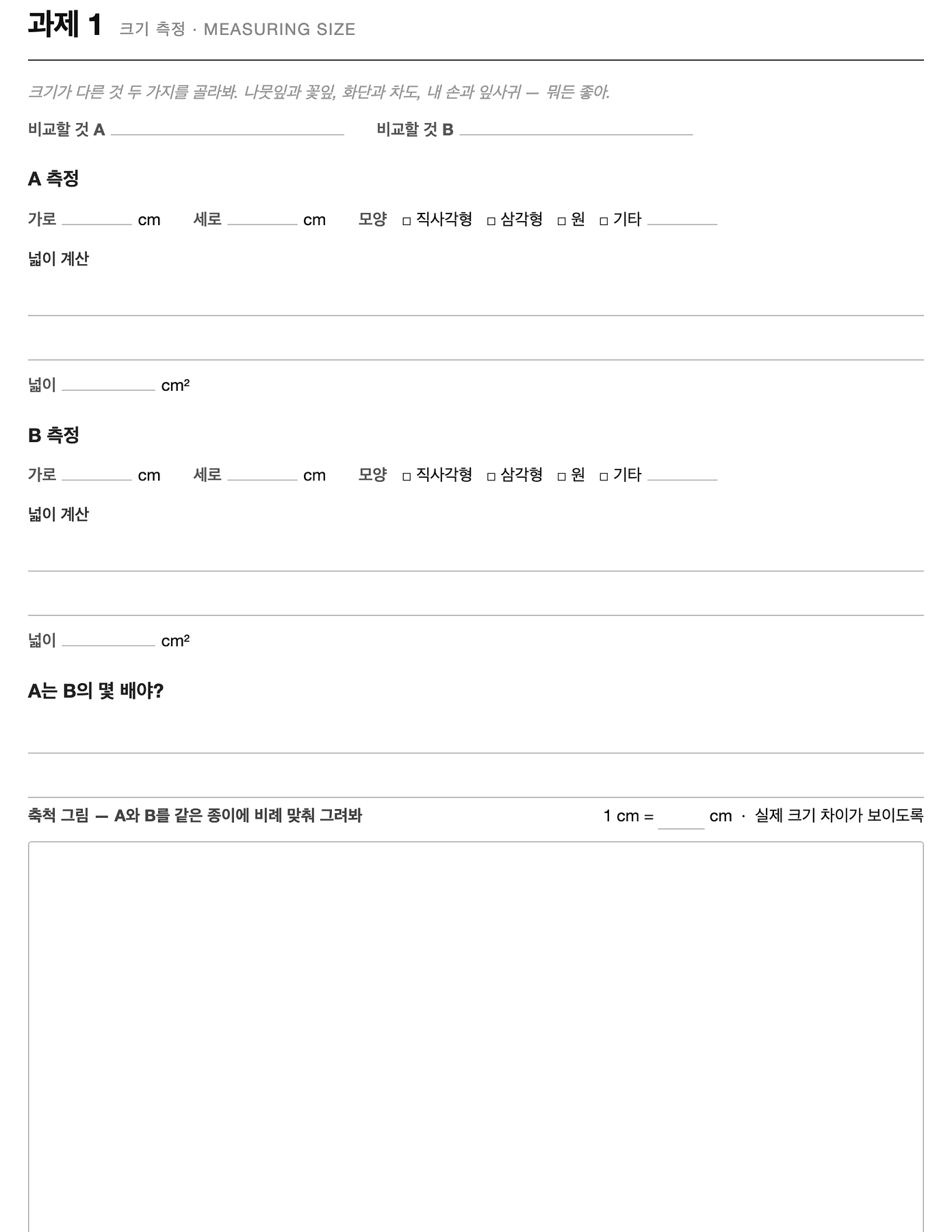 Grades 2 to 5 · One outing · about two hoursScale expedition field report