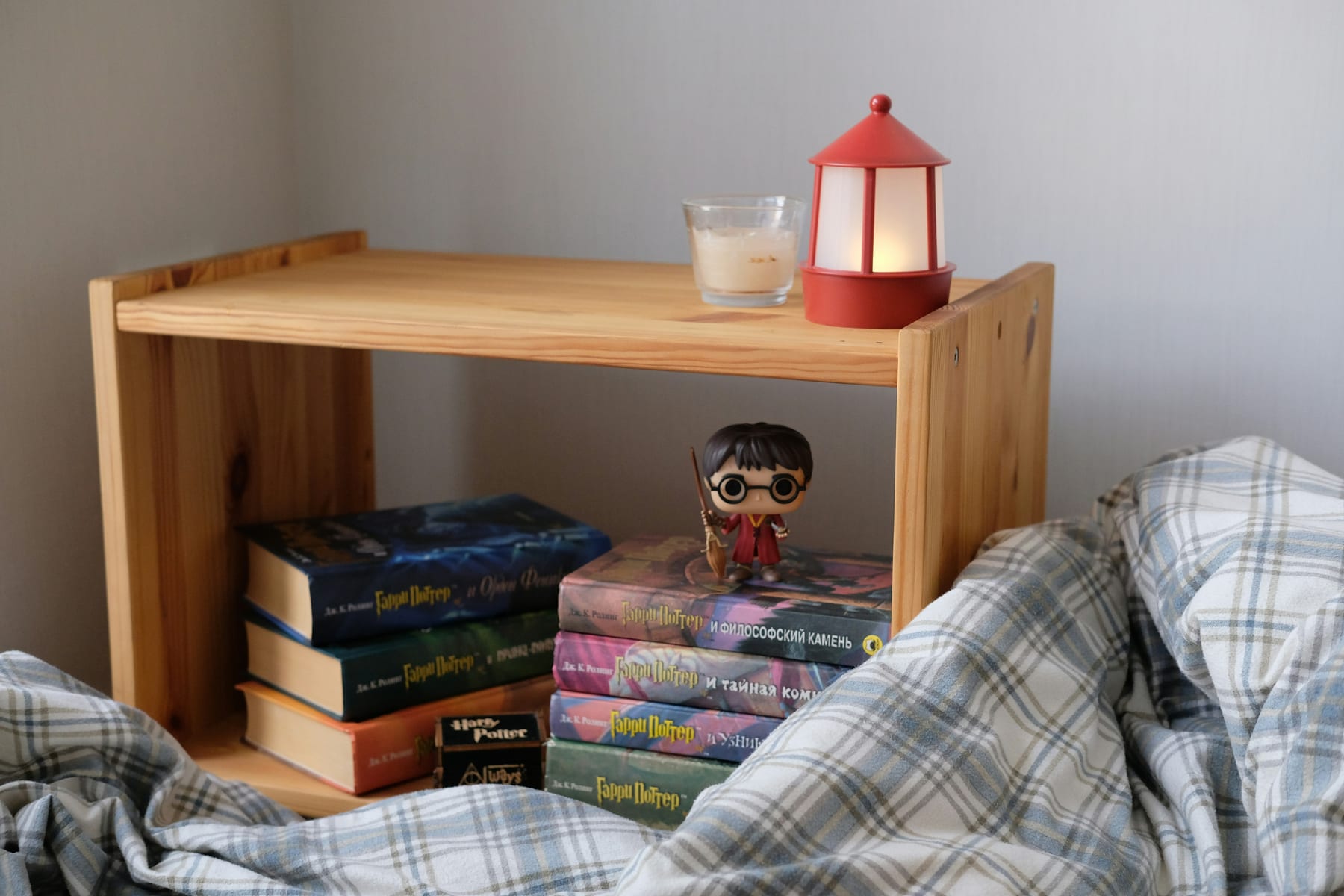
Bedtime
Week four, where the most emotionally loaded hour of the day carries the three Korean words that will outlast every other word in the month.
Scan to open in WeChat
WeChat has no share link, so point a phone at the code.
Bedtime asks a three-year-old to separate from everyone he likes, regulate himself without help, and stop doing the thing he is doing. It is the hardest hour in the day and it arrives every day.
So it is the last week, and it carries the words that matter most.
Why it holds the social-emotional weight
Everything the week wants is already inside the routine: winding down, taking care of a body, being grateful, and the idea that there is a tomorrow.
Nothing has to be staged. Naming what the day felt like happens in the dark with the lights off, which is where a three-year-old will say more than he would at a table.
The three words
Week one: 집, 방, 문. Week two: 부엌, 거실, 침실. Week three: 깨끗해요, 더러워요, 열어요. All review by now.
Week four: 안녕하세요, 감사합니다, 주세요.
These are not house words. They are conduct — formal hello, formal thank you, and please give me — and the plan is blunt about why they close the month: they are the most transferable Korean these boys will ever learn. 안녕하세요 greets any Korean speaker alive. 감사합니다 works everywhere. 주세요 works at any table, in any shop.
Twelve words in four weeks, and the last three are the ones that would carry them through a room full of relatives who speak no Mandarin and no English.
That is not an accident of sequencing. It is a Korean American father deciding what his sons should be able to say first.
The bedtime ritual is the vehicle
These words fit the routine without being bolted onto it. Goodnight to each person by name. Thank you to whoever ran the bath. Please, when something is wanted, said at the moment of wanting it rather than rehearsed.
Same words, same order, every night. The same design as the mealtime phrase in week two: at three, the shape is learned long before the meaning is.
Friday
The last day of the month is a small celebration of what the four weeks held. Not a review, and not an assessment.
The checklist underneath it is still noticing rather than testing. Did he greet someone with 안녕하세요, prompted or not. Did he say 감사합니다 or 고마워 without being asked, even once. Does the bedtime sequence — bath, pyjamas, teeth, story, sleep — run without much resistance now.
One month. Two three-year-olds. Three languages at one table, and no worksheets at all.