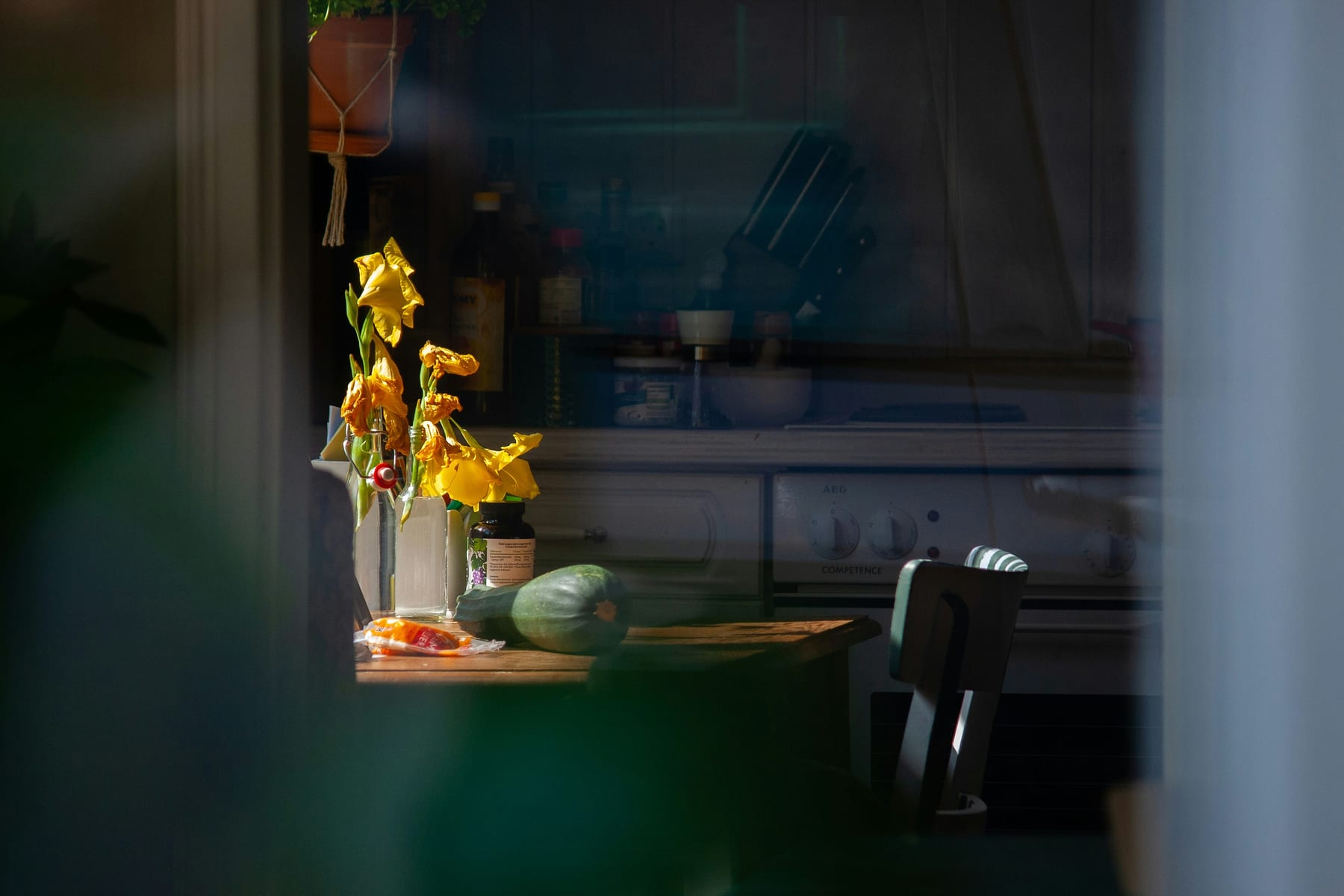
The kitchen
Week two, where counting stops being abstract because the things being counted are about to be eaten, and three-year-olds pour water from a real pitcher into a real cup.
Scan to open in WeChat
WeChat has no share link, so point a phone at the code.
A pitcher, two cups, and a tray to catch what misses. That is the highest-value fine motor activity available to a three-year-old, and it costs nothing.
The plan says to start with a wide target and shrink it as they get better. Dry rice instead of water if the mess is too much on a given day.
Why the kitchen is the whole week
It is the richest room in the house at this age. Water, textures, smells, real tools at a small scale, and the most natural counting surface in daily life: spoons, eggs, crackers.
That last part is the week’s real move. Counting stops being an exercise. They count the snack before they eat the snack, so the number is attached to something they want. Sets of three to five, and the plan is explicit about not pushing past what they can confidently touch one at a time.
Setting the table is the same trick from the other direction. Count the people, get that many plates, and discover the mismatch yourself when someone has none.
What gets sorted
The silverware drawer, plastic utensils into a muffin tin, first by type and then by colour. A row of containers with different lids — screw, zip, snap, clasp — each with a pom-pom hidden inside. Sponges squeezed from one bowl into another, counting the squeezes.
Every one of those is a fine motor exercise that a catalogue would sell as a manipulative. All of them are already in the kitchen.
The manners are not a lesson
Nothing this week teaches etiquette as a subject. It happens because the kitchen is where it happens: setting the table, waiting until everyone is served, saying 谢谢 to whoever cooked.
There is one fixed phrase before eating, said the same way every day, with no variation. 谢谢妈妈做饭. Thank you, mum, for making the food.
The same-every-day part is the design. At three, a ritual is learned by its shape long before it is understood by its meaning.
Korean, week two
Week one was 집, 방, 문 — house, room, door. Those are now assumed and used as review.
This week adds three more: 부엌, 거실, 침실. Kitchen, living room, bedroom.
Which means that by Friday of week two, the two of them can name every room in the house in a language neither parent speaks to them in daily. Six words, learned five minutes at a time, from their sister.
The one that runs longest
The kitchen play station goes out and stays out for three or four days: pots, wooden spoons, dry pasta in a bowl, muffin tins. A parent drops in for two minutes as a customer, orders something, and then leaves.
The instruction after that is the important one. If it is still going after fifteen minutes, protect it. Do not clean up, do not redirect, do not join in again.
Pretend play at this age loads working memory harder than any drill does, and the only way to get a long one is to stay out of it.