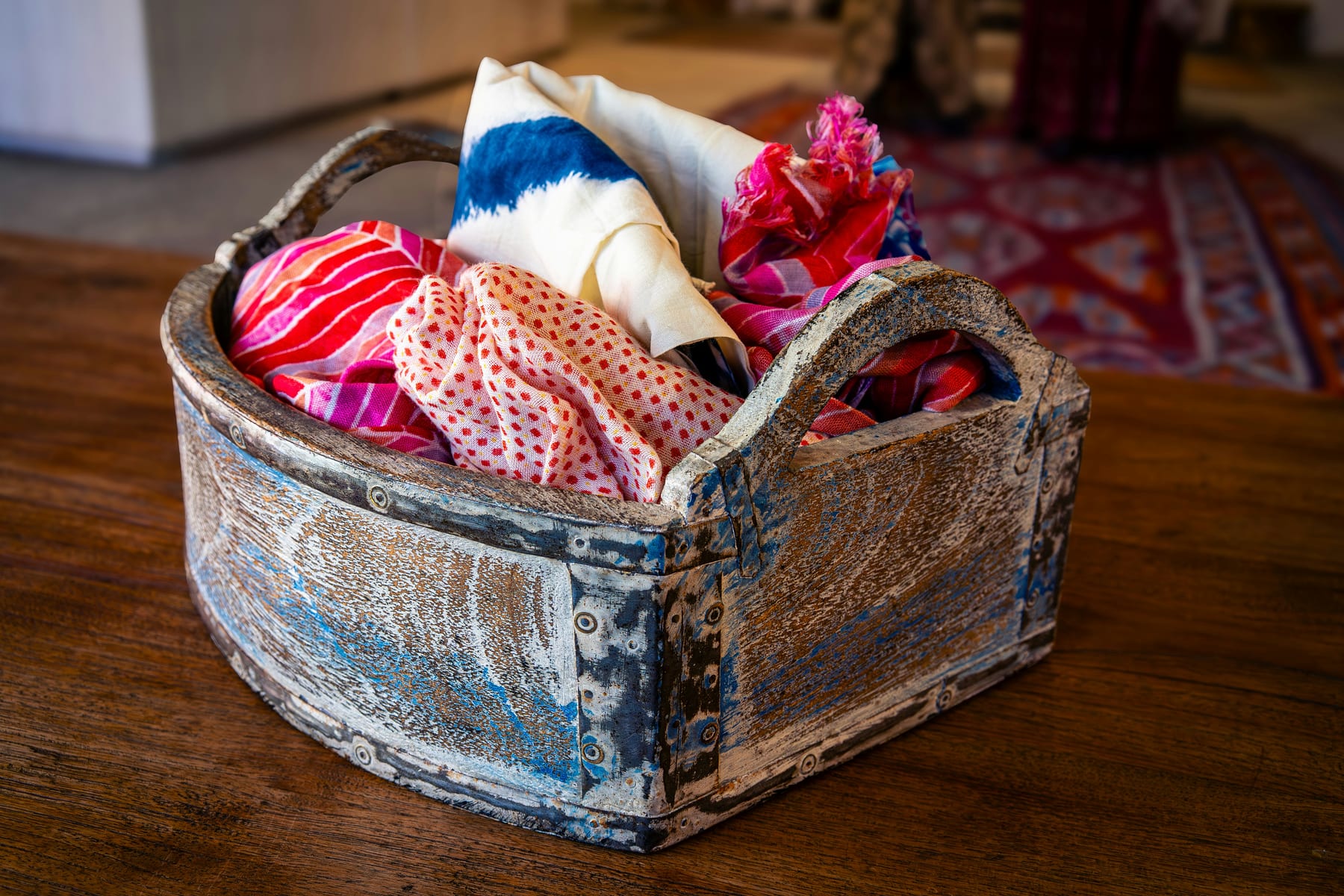
Getting dressed
Week three, where the hardest daily negotiation in a house with two three-year-olds is treated as the curriculum instead of the obstacle to it.
Scan to open in WeChat
WeChat has no share link, so point a phone at the code.
Getting dressed asks a three-year-old to use both hands independently, follow a sequence that cannot be reordered, work a button, and know which hole his leg goes in.
Which is why it is week three, rather than the thing standing between the family and week three.
The frame
Every morning already contains this. The plan does not add an activity; it notices that a hard one is already happening and puts the week’s weight on it.
Gross motor rides along, because getting dressed at three involves a lot of falling over. Etiquette rides along too, in a form small children actually understand: clean clothes are how you turn up for other people.
And sequencing is the cognitive spine. First this, then that, in an order the world enforces rather than an adult.
Sorting, again, but with a real edge
Clothes go into clean or dirty. That is one attribute, sorted, which is the same cognitive move as the silverware drawer in week two.
Except this time the categories are not obvious from looking. A shirt worn for an hour looks clean. The child has to remember rather than observe, which is harder and better.
Korean, week three
집, 방, 문 from week one. 부엌, 거실, 침실 from week two. Both now review.
This week: 깨끗해요, 더러워요, 열어요. It’s clean. It’s dirty. Open it.
The plan gives the reason these three, and it is the sharpest thinking in the month. Their mother already says 干净, 脏 and 开 all day long, because those are the words laundry and drawers and doors demand. So the Korean versions do not need a new occasion invented for them. They slot into moments that were going to happen anyway, several times a day, whether or not anyone planned a lesson.
Twelve words is not many. But every one of them is attached to a thing that recurs.
What to watch for
The end-of-week list is four lines, and none of them is a test.
Does he try to put on his own pants or shirt with barely any help. Does he sort clean from dirty without being asked. Does he follow a two-step instruction — first this, then that. Does he name a body part in Mandarin when asked, mid-dressing.
The fourth one is the giveaway that this is a language week wearing motor-skill clothes. Nobody sits him down to learn 手 or 脚. He learns them because his arm has to go somewhere.